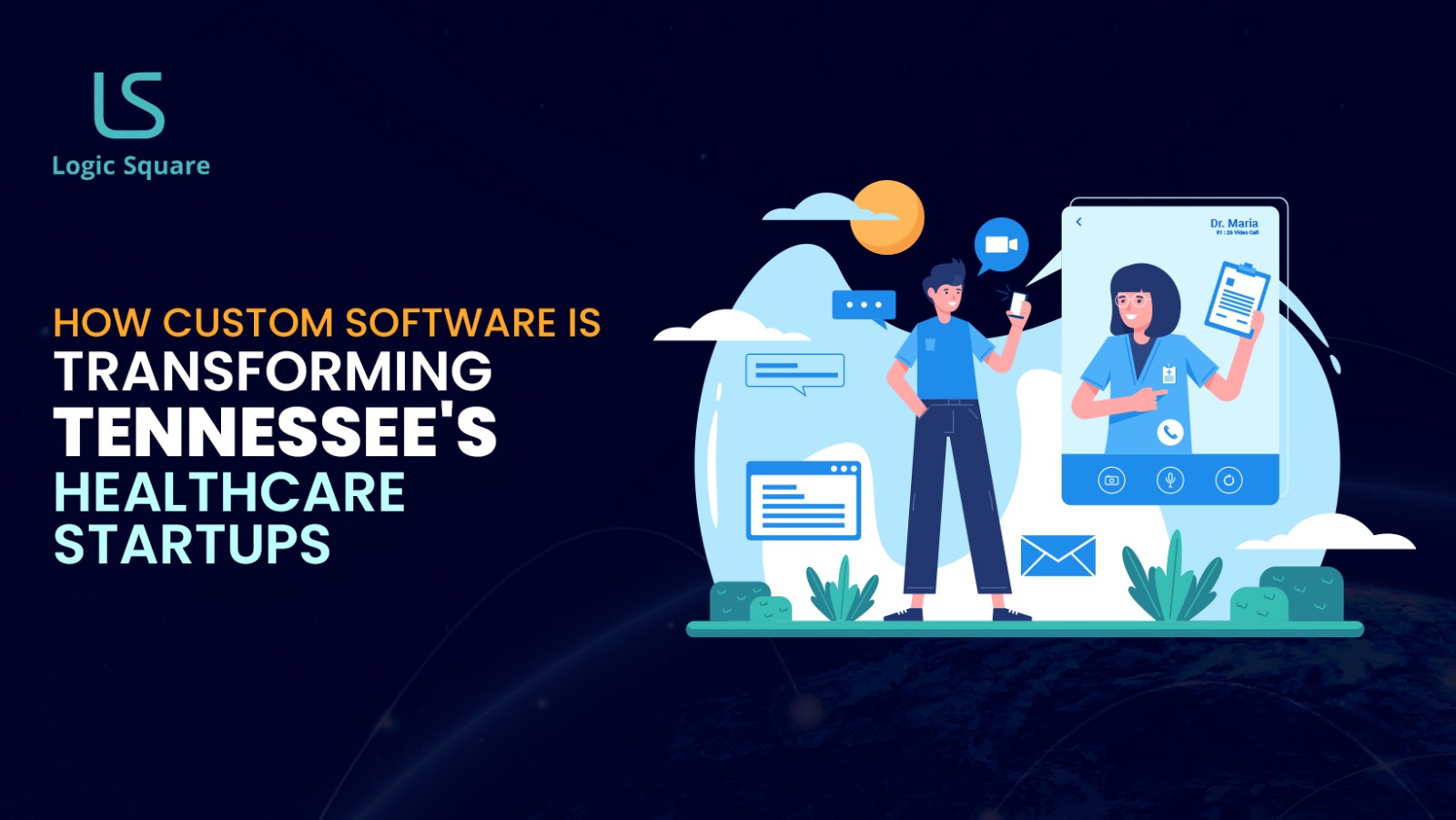
Healthcare software development is the process of designing, building, and deploying digital applications for medical providers, hospitals, and health startups. It includes systems for electronic health records (EHR), telehealth, patient engagement, compliance management, and clinical workflow automation, all built to meet strict regulatory standards like HIPAA and FHIR.
Tennessee is long recognized as a healthcare industry hub. Currently, it is undergoing a significant change as startups are relying on custom healthcare software development. It is essential to bridge the gap between traditional medical practices and modern digital needs that will redefine patient care, streamline operations, and introduce new efficiencies to the market.
For these emerging companies, off-the-shelf software often falls short. The nuanced demands of modern healthcare, from complex regulatory requirements to seamless integration is a one-size-fits-all solution. This is where specialized healthcare software development in Tennessee comes in, offering startups the ability to build platforms tailored to their specific vision and the needs of their patients.
On this page+
Enhancing Patient Care Through Tailored Digital Solutions
The most visible impact of custom healthcare software is seen in the direct improvement of patient care and engagement. This is why startups are moving beyond legacy systems to create dynamic, user-friendly platforms that empower both patients and providers.
How Is Telehealth Transforming Healthcare Access in Tennessee?
Custom Telehealth Solutions Are Leading the Charge in Telemedicine, Removing Geographical Barriers, and Increasing Care Accessibility. 76% of U.S. hospitals now link patients and providers via telehealth, says the American Hospital Association, and rural states had the biggest jump in uptake since 2020. In both urban and rural populations, secure telemedicine software solutions allow providers to conduct virtual visits and manage patient care remotely
This is particularly crucial for managing chronic conditions and allowing for continuous care outside the confines of a traditional clinic. Development firms are creating these platforms to be robust and secure, ensuring patient data privacy while broadening the reach of healthcare services across Tennessee.
Startups developing virtual-care products should understand how HIPAA-aware telehealth platforms handle access controls, encryption, audit trails, patient workflows, integrations, and sensitive health information.
A prime example of innovation in patient services is Qualiphy. It developed a custom platform to connect patients with safe and telehealth consultations. By using health data and analytics, the company optimizes the patient experience. This illustrates how a targeted custom application can solve a fundamental challenge in healthcare access.
How Does Custom Software Personalize the Patient Experience?
Beyond telehealth, startups are using custom apps to create comprehensive patient engagement platforms. These tools provide patients with easy access to their medical records, appointment scheduling, and secure communication channels with their care teams.
For instance, a custom application might integrate with wearable devices to track vital signs, feeding real-time data back to providers and allowing for proactive interventions. This level of personalization not only improves health outcomes but also fosters a stronger patient-provider relationship.
Streamlining Operations with Custom Hospital Management Systems
While patient-facing applications are highly visible, the impact of custom software on the backend operations of healthcare facilities is equally transformative. Tennessee\’s startups are developing solutions that tackle long-standing inefficiencies in hospital and clinic management. For instance:
1. Modernizing Electronic Health Records (EHR)
Generic Electronic Health Record (EHR) and Electronic Medical Record (EMR) systems can be rigid and counterintuitive, forcing providers to adapt their workflows to the software. Custom EHR/EMR systems, however, are designed around the specific processes of a clinic or hospital, improving clinical efficiency and reducing administrative burdens. These tailored systems integrate smoothly into existing workflows, automate routine tasks, and ensure that data is captured accurately and efficiently.
2. Achieving Seamless Medical Data Integration
One of the biggest challenges in healthcare is the fragmentation of data across different systems. Custom medical data integration solutions are built to solve this problem by ensuring interoperability. Using standards like HL7 and FHIR, developers create software that allows disparate systems—such as EHRs, lab systems, and pharmacy databases—to communicate and exchange data securely. This creates a unified patient record, giving providers a holistic view of a patient\’s health history and enabling more informed, coordinated care. For startups, offering these integration capabilities is a key differentiator, providing immense value to established healthcare organizations.
3. Automating Clinical and Administrative Workflows
Custom software can automate a wide range of tasks, from patient intake and billing to clinical documentation and reporting. This automation reduces the risk of manual errors, frees up staff to focus on higher-value activities, and improves overall operational efficiency. For a startup, developing a tool that automates a particularly cumbersome process can be a powerful entry point into the market.
Fueling a New Wave of Healthtech Innovation
Tennessee’s supportive ecosystem has become a fertile ground for startups focused on solving specific medical challenges through technology. Partnering with development firms like Logic Square Technologies, which specialize in affordable healthcare MVP development, helps these startups bring their ideas to life efficiently.
By building a Minimum Viable Product (MVP), startups can quickly launch a core version of their product, collect user feedback, and refine their offering — accelerating time to market without requiring a large upfront investment.
This agile model is transforming healthcare delivery. Startups like HyrTech exemplify this progress by offering end-to-end virtual care—allowing patients to consult doctors online and receive their prescribed medicines and supplements right at their doorstep.
The Bedrock of Trust: Healthcare Compliance Software
Every healthcare startup solution in Tennessee must be built on a foundation of robust security and strict regulatory adherence. Custom development provides a distinct advantage here, as it allows for healthcare compliance software to be designed from the ground up.
Developers specializing in healthcare are well-versed in the stringent requirements of the Health Insurance Portability and Accountability Act (HIPAA), ensuring that all patient data is encrypted, access is tightly controlled, and the platform is protected against breaches. By building compliance into the core architecture, startups can earn the trust of patients as well as providers, which is essential for long-term success.
Paving the Way for a Digitaly Transformed Future
The fusion of medical expertise and technological innovation is positioning Tennessee at the front of a national shift in how medical care is delivered. Having a custom healthcare software is the engine of this digital healthcare transformation in Tennessee
The trend is moving toward even more advanced solutions, including AI-powered diagnostic tools that can analyze medical images with incredible accuracy. Companies like Logic Square Technologies are helping entrepreneurs turn these futuristic healthcare solutions into reality, fostering a culture of continuous innovation
Ultimately, the custom software revolution in healthcare is helpful for building a connected health ecosystem that is more accessible, efficient, and responsive to the needs of every patient. By providing tailored, secure, and innovative digital tools, the state\’s startups are not just building businesses; they are building the future of healthcare.
Frequently Asked Questions (FAQs)
1. What is custom healthcare software development?
Custom healthcare software development is the practice of creating customized digital solutions , like EHR systems, telehealth services, and patient engagement apps , that are specifically created around the workflows of a healthcare organization, compliance requirements, and patient population, instead of standard, off-the-shelf software.
2. Why do Tennessee healthcare startups need custom software?
The Tennessee healthcare market includes both urban and rural populations with different access needs. Using custom software is the way to go for startups looking to create HIPAA-compliant, interoperable platforms that can solve unique regional issues, rural telehealth, chronic disease management, and EHR integration, all of which off-the-shelf solutions cannot.
3. What regulations must healthcare software in Tennessee comply with?
Healthcare software in Tennessee needs to be HIPAA (Health Insurance Portability and Accountability Act) compliant for patient data privacy, HL7 and FHIR standards compliant for data interoperability, and HITECH Act-compliant for electronic health records security.
4. How much does it cost to develop a custom healthcare app?
The cost of custom healthcare software development typically ranges from $30,000 for a basic MVP to $300,000+ for a full-featured platform, depending on complexity, compliance requirements, and integration needs.
5. What is an MVP in healthcare software development?
A Minimum Viable Product (MVP) in healthcare software, is a minimalistic version of your digital health platform, containing only the essential features. Introducing an MVP allows startups to launch swiftly, obtaining authentic user feedback to iterate, ultimately saving upfront costs and speeding up time to market.
Work with us