AT A GLANCE
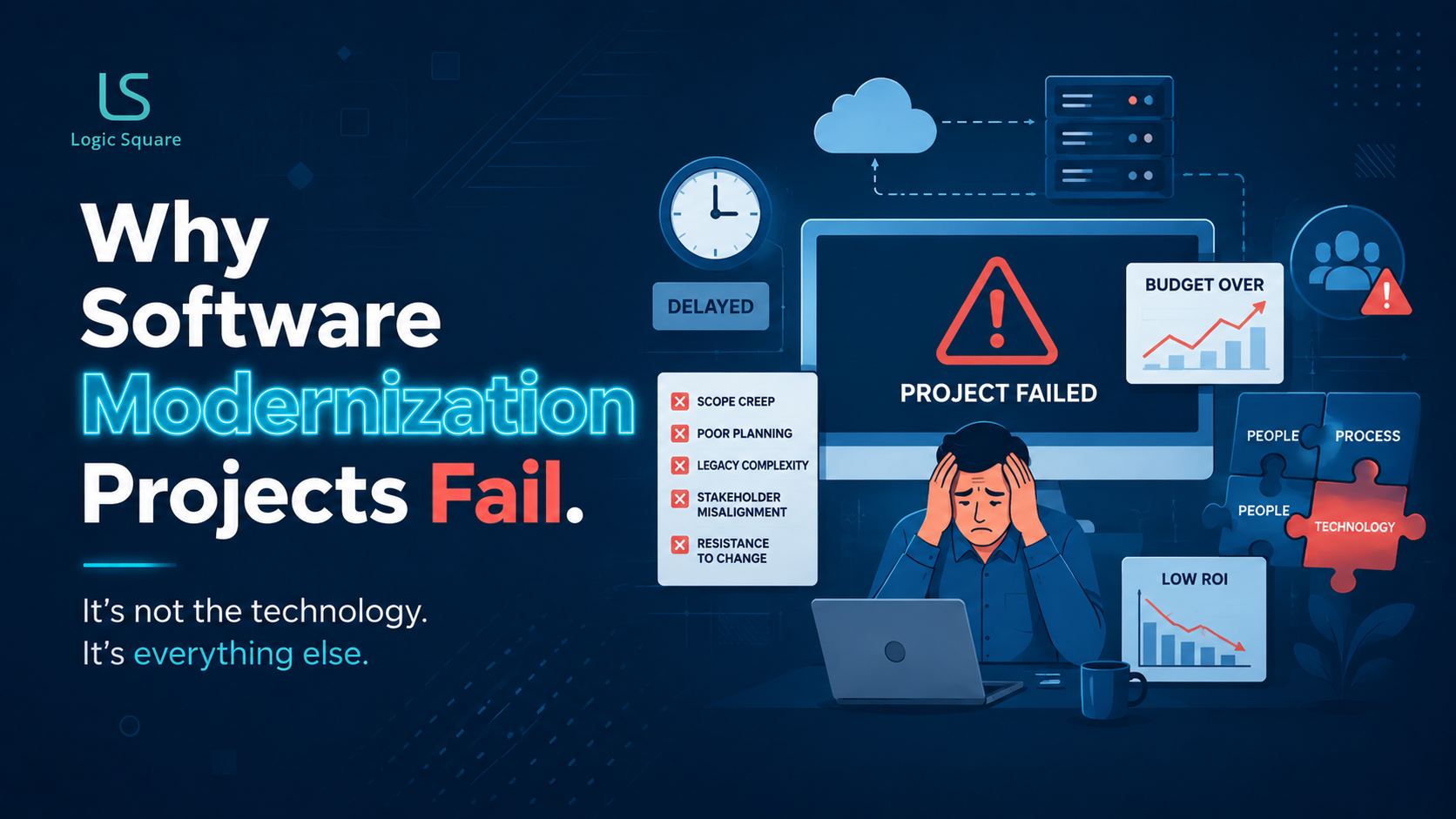
Modernization projects rarely fail because of the new technology itself. They fail because too much was replaced all at once; because the real behavior of the old system was never understood; because the users who had to use it were an afterthought; or because the business expectations evolved faster than the rebuild progressed. The opposite of these instincts is typically correct: replace in stages; understand the old system; design for the people who will use it; and keep the business alive and kicking. Big-bang replacement is the most frequent source of project failure.
A business decides its aging system has to go. The plan is ambitious: replace the whole thing with something modern, switch over, move on. Eighteen months and a large budget later, the project is late, over budget, half-adopted, or partially deployed and the old system is somehow still running because no one dared turn it off.
In most modernization initiatives, the underlying issue is not the technology itself, but how the transition is planned and executed. The new stack usually works fine. The failure is in how the modernization was scoped, sequenced, and rolled out. Here’s what actually goes wrong, and what we do differently.
Modernization rarely fails on the technology. It fails on scope, sequencing, and adoption.
On this page
Failure 1: Replacing everything at once
The big-bang rewrite is the most seductive and most dangerous approach. Tear out the whole old system, build a complete new one, flip the switch. It feels clean. It almost never works, because you’re betting everything on a single massive cutover, you can’t learn and correct along the way, and the day the switch flips is the day you discover everything the old system quietly did that nobody documented.
A phased modernization approach is typically more effective than attempting a full replacement at once. The highest-friction or highest-impact area is addressed first, validated in real operational use, and then expanded incrementally. This allows the business to continue operating on the existing system for workflows that have not yet been migrated, while each phase reduces risk and informs the next stage of modernization.
Failure 2: Not understanding the old system before replacing it
Old systems are full of behavior nobody remembers building, the edge cases, the special handling, the quiet workaround that turned out to be load-bearing. Teams rush to replace the system they’re frustrated with before they actually understand everything it does. Then the new system goes live and breaks the one obscure process that the whole business secretly depended on.
The unglamorous truth is that modernization starts with understanding, not building. Before we replace anything, we map what the current system actually does — including the undocumented behavior living in someone’s head because the surprises hiding in the old system are exactly what sink the new one.
Failure 3: Treating adoption as an afterthought
A modernization can be technically perfect and still fail completely if the people who have to use it won’t. New systems ask people to change how they work, and people resist that — especially if the new system is harder, slower, or less familiar for the tasks they do all day.Many technically capable platforms fail to gain adoption because they are designed around system architecture rather than the way teams actually work.
Adoption has to be designed in, not bolted on. That means building around how people actually do their jobs, involving them early, and accepting that a system slightly less elegant but actually used beats an elegant one that everyone routes around.Even technically strong platforms can fail when user adoption is treated as a secondary concern rather than part of the modernization strategy itself.
A technically perfect system that no one uses is still a failed project.
Failure 4: The business changes faster than the rebuild
A long modernization project assumes the target stays still. It rarely does. If the rebuild takes eighteen months and the business shifts at month eight, you can spend the back half of the project building toward a target that no longer exists. The longer the project, the higher this risk climbs.
This is another argument for phases. Shorter cycles that each deliver something usable mean the project can absorb a change in direction instead of being broken by it. You’re never eighteen months committed to assumptions that might not survive month eight.
Failure 5: Confusing modernization with replacement
The biggest framing mistake is assuming modernization means rebuilding everything. Often it doesn’t. Sometimes the right move is to integrate the old system with something new, to simplify or automate the worst part, or to isolate and replace only the highest-friction piece while leaving the rest alone. Treating every modernization as a full replacement is how you turn a manageable project into a risky one. The question isn’t “how do we replace this” — it’s “what is the smallest change that removes the most pain.”
And a related truth worth naming: old systems contain undocumented business decisions. Years of small adjustments, special cases, and quiet fixes are encoded in that legacy code, and most of them were never written down anywhere else. That is why understanding the old system isn’t busywork — it’s recovering business logic nobody remembers making.
A modernization decision framework
When we look at a system someone wants to modernize, the choice is rarely “rebuild or don’t.” It’s about matching the response to the situation.
| Your situation | The usual right move |
|---|---|
| The system works but parts are painful | Modernize in phases |
| The core workflow is undocumented | Map it before touching anything |
| Users actively avoid the current system | Redesign around how they work |
| The business is changing fast | Shorter delivery cycles |
| Everything is tightly coupled | Isolate the highest-pain piece first |
| A generic tool now covers most of it | Integrate or replace with that, don’t rebuild |
What actually works
The successful modernizations we’ve been part of share a shape:
- They move in phases rather than one big cutover.
- They start by genuinely understanding the old system before touching it.
- They design for the people who have to adopt the new one.
- They keep the business running throughout — never betting the operation on a single switch-flip.
- They sequence the highest-pain, highest-value piece first, so there’s a real win early.
Phased modernization is typically lower-risk, easier to validate, and more sustainable operationally.
Frequently asked questions(FAQs)
1. Why is big-bang replacement so risky?
Because it bets everything on a single cutover with no chance to learn and correct along the way — and the moment you switch, you discover everything the old system quietly did that nobody documented. Phased modernization spreads and reduces that risk.
2. How do you modernize without disrupting operations?
Move one high-pain piece at a time, prove it in real use, then expand — while the old system keeps running everything not yet migrated. The business never depends on a single switch-flip going perfectly.
3. What’s the most overlooked cause of modernization failure?
Adoption. A technically excellent system that people won’t use is still a failure. Designing around how people actually work, and involving them early, matters as much as the engineering.
4. When should you modernize instead of replace?
More often than people expect. If a generic tool now covers most of what the old system did, or if integrating and simplifying removes the real pain, that’s usually lower-risk than a full rebuild. Replacement is one option, not the default — the goal is the smallest change that removes the most pain.
5. How long should a modernization take?
It depends on scope, but shorter phased cycles beat one long project — partly to reduce risk, partly because a long rebuild can be overtaken by changes in the business before it ships.
Modernizing Legacy Systems Without Disrupting Operations
Modernization projects fail when businesses are forced into high-risk rewrites, unclear migration paths, or systems that teams never fully adopt.
At Logic Square, we help organizations modernize operational software through phased delivery, workflow analysis, and production-focused engineering. Our approach prioritizes operational continuity, user adoption, and measurable business outcomes without forcing unnecessary full-system replacement.
Whether the challenge involves legacy platforms, disconnected workflows, scaling limitations, or growing technical debt, we help teams modernize incrementally while keeping critical operations running.
Ready to evaluate your modernization strategy?
Work with us