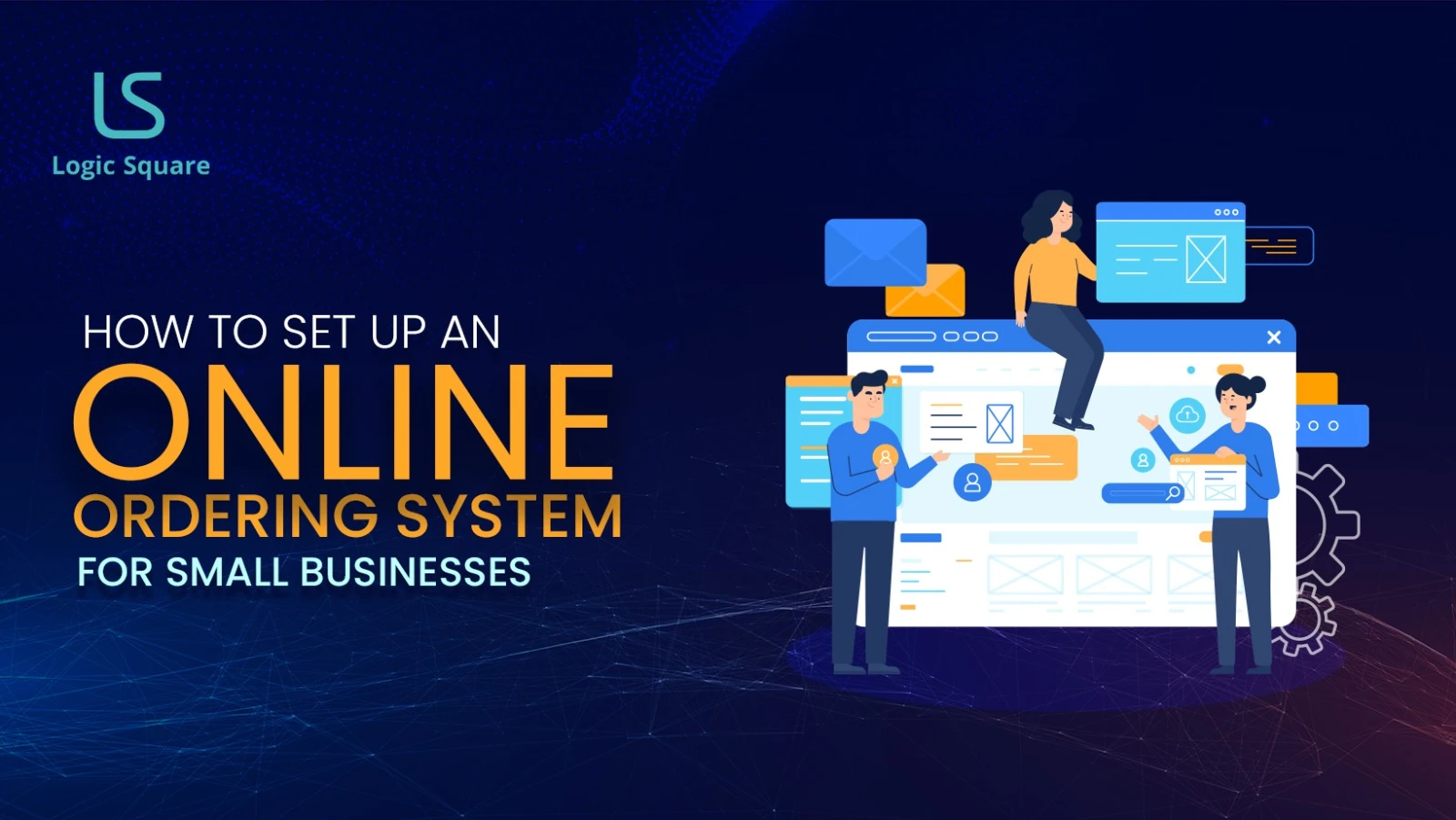
The right online ordering system for a small business depends less on whether you can take orders online and more on what you need to own: customer data, the checkout experience, POS and inventory integration, delivery workflows, and the economics of every order. Almost any option on the market will take an order. They differ enormously in who ends up owning the customer, the data, and the margin.
Businesses that need complete ownership of these elements may benefit from a custom customer-facing platform built around their ordering experience and operational requirements.
On this page+
The four ways to take an order
Marketplaces. Delivery and ordering marketplaces bring you their audience. That is the entire trade: demand you did not have to generate, in exchange for a commission on every order, their checkout, their customer relationship, and their rules. The customer who ordered from you through a marketplace is, in every data sense that matters, their customer. For discovery, marketplaces can be worth the toll. As the primary channel for a business with repeat customers, the commission line compounds into one of the largest expenses on the P&L, paid on demand you increasingly generated yourself.
SaaS ordering platforms. Subscription ordering systems give you a branded ordering page, usually commission free or close to it, with standard menus, pickup and delivery options and common POS integrations. For most small businesses this is the sensible default: predictable monthly cost, someone else runs the infrastructure, and the customer data is at least partially yours. The constraints are the platform’s assumptions. If your ordering flow matches their template, excellent. If it does not, you will bend your process around their product, and every workaround has a cost you learn about later.
White label ordering. A step further: the platform’s engine under your brand, sometimes including your own app. More ownership of the experience, more configuration surface, higher cost. Worth it when brand experience is a real differentiator and the underlying flow is still standard.
Custom. You own everything: flow, data, integrations, economics. You also own everything: build cost, maintenance, uptime, and every future feature. Custom is not the premium tier of the same product. It is a different commitment, justified only under specific conditions covered below.
The ownership questions that decide it
Work through these before comparing any vendors.
Who owns the customer? If repeat business is your model, the ability to know your customers, reach them directly, and see their history is not a feature. It is the asset. Marketplaces keep it. SaaS platforms share it. Custom gives it to you entirely. Price each option with that asset on the balance sheet.
Where does the order go after checkout? An ordering system that does not talk to your POS and inventory creates a re-keying job at the counter and two versions of the truth about stock. Integration is where ordering projects quietly succeed or fail: confirm, with your actual POS and your actual menu complexity, not the vendor’s compatibility page, that orders flow through and stock levels flow back. If you already run several disconnected tools, fix that architecture first; we wrote about the compounding cost of disconnected stacks in ops platform vs SaaS tool sprawl.
What are the real per-order economics? Build a simple model per channel: order value, minus commission or transaction fees, minus payment processing, minus delivery cost or courier share, minus the allocated subscription. Run it at your actual volume, not aspirational volume. Businesses are routinely surprised to find their busiest channel is their least profitable one, and the surprise was sitting in arithmetic the whole time.
What does year three cost? Subscriptions look small monthly and add up annually. Custom looks large upfront and then carries maintenance: as a reference point from our own engagements, standard software maintenance runs around 20 percent of build cost annually. Compare total cost of ownership over a realistic horizon, not sticker prices.
When custom ordering is actually worth it
Custom earns its cost when ordering is your differentiation, not your utility.
This is particularly relevant for consumer platforms where ordering, payments, customer data, and the user experience are central to the business model.
The honest conditions: your flow genuinely does not fit templates (complex configuration, scheduled or recurring orders, B2B pricing tiers, multi location routing), the per-order fees you would eliminate are large at your real volume, the customer data has strategic value you will actually use, and you have the appetite to own software, not just launch it. One condition is not enough. If you are at “the SaaS platform is fine but the commission stings,” negotiate or switch platforms before you commission a build.
Before investing in a custom platform, review these situations where you should not build custom software.
Our custom vs off-the-shelf guide walks this decision in full, including the cases where buying stays right indefinitely, and the cost guide covers what a build of this shape actually runs.
For restaurant chains, cloud kitchens, or delivery businesses managing several venues, multi-restaurant delivery software can centralize menus, orders, payments, deliveries, and reporting across locations.
If you are weighing ordering platforms or wondering whether your flow justifies custom, book a strategy call with our team. Bring your menu or catalog, your POS, and last month’s channel volumes. We will run the ownership questions with you and tell you plainly which tier fits, including when the answer is a subscription platform and not us.
FAQs
How much does an online ordering system cost?
Marketplaces cost a commission per order. SaaS platforms run on monthly subscriptions plus payment processing. White label sits above that. Custom is a build project plus ongoing maintenance, which in our engagements runs around 20 percent of build cost annually. The comparison that matters is total cost of ownership at your real order volume over two to three years.
Should a small business use a marketplace or its own ordering system?
Usually both, deliberately: marketplaces for discovery, your own channel for repeat customers. The mistake is letting the marketplace remain the default for customers who already know you, which pays a permanent commission on demand you generated.
When is a custom ordering system worth it?
When several conditions hold at once: your flow does not fit platform templates, eliminated per-order fees are material at real volume, customer data has strategic value you will use, and you are prepared to own software long term. If only the fees hurt, switch platforms instead.
Can an online ordering system integrate with POS and inventory?
The good ones can, but "has an integration" and "works with your setup" are different claims. Test with your actual POS, menu complexity and stock model before committing. An ordering channel that does not update inventory creates manual re-keying and two versions of stock truth, which costs more than the subscription saves.
Work with us